In recent years, something has shifted in the way we look at the world. Not long ago, technology felt like a gift for creators—helping us work faster, publish more easily, and reach wider audiences. Today, however, a different emotion is growing stronger. It is no longer exciting. It is a caution. We hesitate. We question. We pause before believing what we see. And despite what some might think, this isn’t only about the internet, algorithms, or filters. It is a deeper change—one that touches the very foundation of modern media: trust.
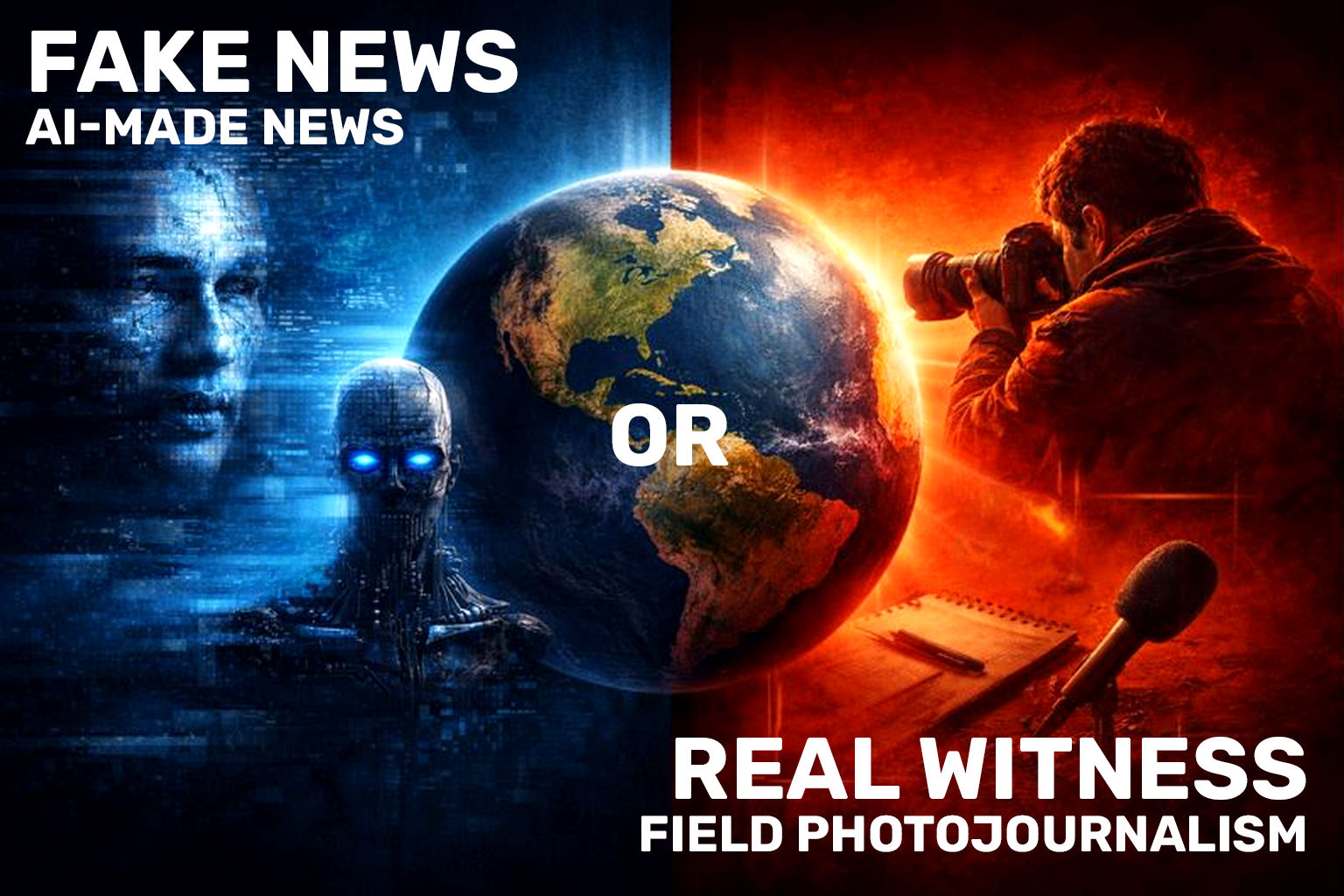
The rapid rise of AI tools has transformed the role of images in our society. For decades, photographs and videos carried weight. They felt like evidence. Of course, framing and context could be manipulated, and captions could mislead, but the general assumption remained simple: if something was photographed or recorded, it most likely happened. That boundary is now fading. A person’s face can be generated even if they do not exist. A dramatic scene can be created with such realistic detail that many viewers will not recognize it as false. A video can look like a report from the field, sound like a witness account, and carry genuine emotional impact—while being nothing more than a synthetic composition of data.
This leads to a serious consequence: we are entering an era in which visual quality is no longer proof of truth. An image can look perfect and still be entirely fictional. A video can be moving and still portray something that never occurred. A voice can sound familiar and still be fully fabricated. And here is the paradox many people have not yet fully understood: the growth of AI does not destroy journalism. It makes journalism more necessary than ever.
That is because we now live in a world flooded with content. There is more material than ever before, yet its meaning is often weaker than it used to be. The internet is increasingly filled with what some call “slop”—fast, mass-produced content designed to attract clicks and trigger emotions rather than deliver facts, context, and responsibility. Some of it is simply empty. Some of it is exaggerated. Some of it is openly misleading. The result is predictable: people are tired. Overloaded. It is harder to truly move them—but also harder to convince them that what they are watching has real value. And within that exhaustion, something important begins to return: the craving for authenticity.
The more synthetic content appears online, the more people will start searching for what is real. Not what is polished. Not what is optimized for algorithms. But what is genuine—rooted in presence, experience, and real contact with the world. This is the main reason why field reporting is coming back to the front line today—not as a romantic figure with a camera, but as a professional whose most valuable product is credibility.
A modern field reporter is not simply “someone who takes photos.” A reporter is someone who understands that their work carries a social role. They go where the story is happening and document it with honesty. They observe, they listen, they speak to people, and they notice what others miss. In a world shaped by deepfakes and synthetic news, the simple sentence “I was there” becomes incredibly valuable again. What sounds like a small detail is, in practice, the foundation of trust. A reporter does not rebuild reality from fragments of the internet. They do not rely on other people’s footage. They do not generate events with prompts. They witness.
But presence alone is not enough, because truth—even when fully real—does not always speak for itself. Truth must be told. This is where storytelling becomes essential, not as a marketing trick, but as a core journalistic skill. In reportage, storytelling is the ability to build meaning. It is about finding the human being inside the event, understanding context, making thoughtful decisions about scenes and characters, and creating a narrative that guides the audience step by step. A strong reportage is not a random collection of images. It is a story that helps people understand reality. And in an age of informational chaos, that ability will only grow in value.
There is another element that will become increasingly important in the years ahead: ethics and responsibility. In the future, audiences and institutions will not only ask, “What are you showing?” They will ask, “How did you capture this?” and “Why should I trust you?” Verification will become part of everyday media consumption. And with it, systems of credibility will return: accreditation, press identification, professional associations, and new tools designed to confirm identity and legitimacy. Not to create artificial elites, but because society will need structures that help distinguish reliable sources in a world full of imitation.
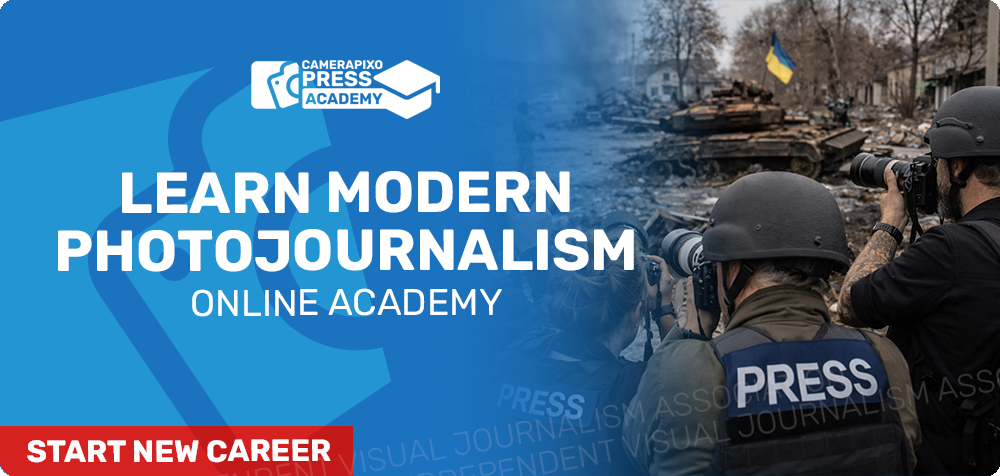
This leads to the central point: now is the best moment to step into the role of a field reporter. The greatest opportunities appear when markets are shifting and new standards are still being shaped. We are in a transitional era. Media organizations are learning how to respond to synthetic content. Audiences are only beginning to grasp the scale of the problem. Law and regulation are not keeping up. This means that those who start today have the time to build real skills, real credibility, and a portfolio of authenticity—before this new “trust economy” becomes fully established.
Of course, reportage is not for everyone. It demands patience, resilience, and a strong inner compass. It requires working with people—often in difficult, emotionally complex environments. It requires being present without becoming a director. It requires the ability to face the truth, even when it is uncomfortable. But if you carry that inner feeling—that you want to show the world honestly, document reality, and tell stories that truly matter—then this is likely not a random idea. It may be your path.
In a world where almost anything can be generated, the greatest value becomes what cannot be generated: real experience, real presence, and real human stories. That is why reportage is not the past. It is the future—and a future we will desperately need.